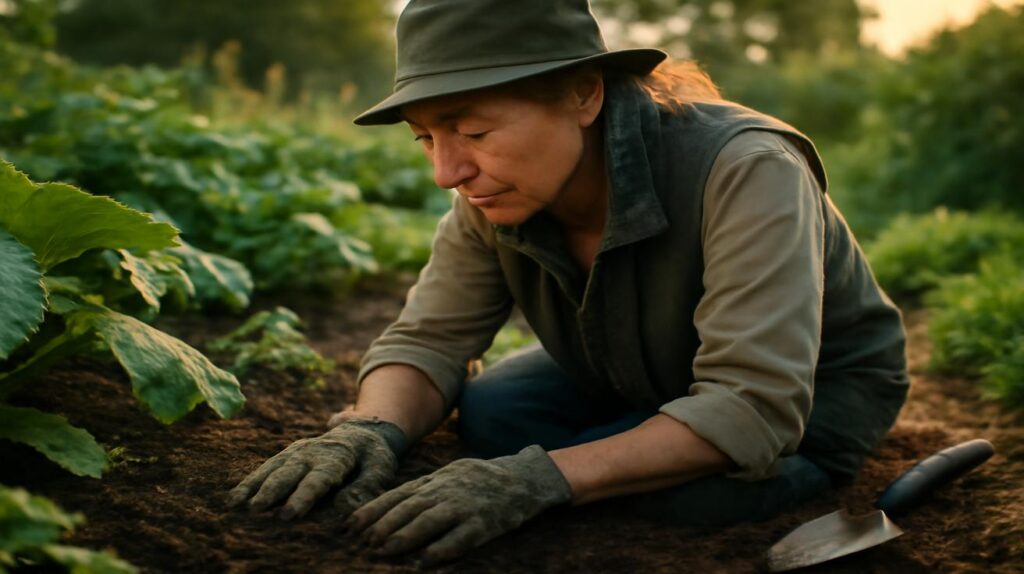
The first time you notice it, the change is almost embarrassingly small. Maybe it’s the way you pause with the hose in your hand, noticing how the water beads on a leaf instead of blindly soaking every pot. Maybe it’s the moment you leave a dandelion for the bees instead of yanking it out with practiced disgust. Or maybe—just maybe—it’s when you stop asking, “How do I make this garden look perfect?” and begin wondering, “What does this place need from me today?”
At first, the difference lives in details so delicate they’re easy to miss. You still pull weeds. You still prune. You still plan. But somewhere beneath the to-do lists and plant tags, a quiet shift is happening. You start to see time differently. You start to see failure differently. You start to see yourself not as the boss of the garden, but as its long-term collaborator. And like most subtle things in nature, once you finally notice it, you can’t unsee it.
The Day You Stop Fighting the Garden
Most of us come to gardening with a battle plan. We declare war on slugs, aphids, blight, drought, weeds, and whatever else has the audacity to mess with our carefully arranged petunias. We inherit this attitude from glossy catalogs and immaculate Instagram posts: the garden is a canvas, and you are the painter, armed with trowel and timeline.
In that early mindset, every brown leaf feels like a personal insult. A dead plant becomes a tiny failure. You Google symptoms with the panic of a new parent, hunting for cures and miracle fixes. You swear you’ll “get it right next year” and then stuff the entire season into a mental folder labeled “Lessons Learned (The Hard Way).”
Then one season—rarely dramatic, almost never planned—something shifts. Maybe a planted-on-a-whim shrub survives a brutal winter while your most coddled rose collapses. Maybe that patch of soil you never amended becomes wildly productive, while the carefully fertilized bed sulks along. Maybe you forget to water a neglected corner, and instead of dying, those plants thrive in the leaner conditions.
Those little surprises crack open a possibility: what if the garden is not a problem to solve, but a conversation to join?
You start paying a different kind of attention. Instead of asking, “How do I force this plant to succeed here?” you ask, “Why does this plant struggle here, while that one flourishes?” The garden stops being a series of separate, controllable objects and turns into a living story—one that was already in progress long before you arrived with your wheelbarrow of ambitions.
This is the subtle mindset shift: from control to relationship. From “What can I get from this garden?” to “What can we become together over time?”
The Slow Magic of Learning to Look
The first practical change is not in what you buy, or plant, or pull. It’s in how you look. Observation sounds so simple, almost boring, until you actually try doing it on purpose. The mind that arrives in the garden is usually in a hurry: scanning for what’s wrong, what’s unfinished, what needs fixing. We’re wired for problems, not patterns.
But a garden has its own way of talking, and it speaks in patterns.
Stand in your garden on a warm morning, before you touch anything. Let your eyes wander without judgment. Where is the light pooling? Where is the wind nudging the taller stems? Which plants are leaning toward each other, shading each other, climbing over each other’s shoulders like children who can’t quite sit still?
You start to notice small, instructive details: the way the soil under the big tree stays moist even after a week without rain. The slice of fence line where nothing ever really thrives, no matter how often you amend the bed. The corner where the wind funnels and breaks the tallest flower spikes every single storm.
This is not passivity; it’s active noticing. You’re collecting data with your eyes, your fingertips, your nose. You run your hand through the soil and feel the texture change—crumbly here, compacted there. You smell the earth after rain and learn the difference between damp and waterlogged. You listen to the quiet hum of pollinators and begin to recognize which flowers are most popular at what times of day.
One day, instead of blaming yourself for yet another failed plant, you catch yourself asking a very different question: “What is this place trying to tell me?”
That’s the moment the garden stops being an object you manage and becomes a teacher you trust.
| Old Mindset | Subtle Shift |
|---|---|
| “How do I fix this?” | “What is this showing me?” |
| Plant must match my plan | Plan adjusts to what thrives here |
| Failure = my fault | Failure = feedback |
| Garden as project | Garden as relationship |
From Controlling Time to Gardening With It
Gardening is full of clocks that mock our impatience. Seed packets promise days to germination. Plant tags estimate days to harvest. We like schedules; they make us feel like we’re doing things “on time.” But the garden has its own calendar, written in temperature and daylight, soil warmth and insect life.
The subtle mindset shift shows up strongly in how you relate to time. In the beginning, you might try to force the season. You plant tomatoes too early because the sun is deceptively warm. You sow seeds all at once, craving uniformity. You cut back perennials in autumn as if closing a book right to the end of the chapter.
Over the years, the garden quietly teaches you that time is not a straight arrow but a spiral.
You begin to notice how spring unfolds not in a single rush, but in pulses—crocus, then daffodil, then tulip, each on its own mysterious schedule. You realize that soil, not the calendar, tells you when it’s time to plant: is it still icy to the touch, or does it feel like cool bread dough under your fingers? You leave some seed heads standing in winter, their silhouettes catching snow and feeding birds, and discover that “finished” is a human idea, not a natural one.
That’s when the garden starts to feel less like a race to a peak moment and more like a long, slow conversation that never really ends. You stretch your sense of time from this week to this season, from this season to the next few years. You plant a tree not as an instant feature, but as a gift to your future self—and maybe to the next person who stewards this patch of earth after you.
With that expanded sense of time comes a softer kind of patience. The impatience never fully disappears; after all, you’re human. You still want the seeds to sprout, the buds to open, the harvest to arrive. But a part of you now recognizes that the small, steady acts matter more than any single dramatic effort. Ten minutes of weeding today prevents an hour of overwhelm in three weeks. A layer of compost this autumn becomes healthier soil and fewer pests next summer.
When you garden with time instead of against it, you begin to see how seemingly insignificant decisions—choosing a native perennial instead of an annual, leaving a bit of leaf litter, allowing clover in the lawn—stack up quietly, almost invisibly, until one day you look around and realize the whole place feels different. Fuller. Softer. More alive.
The Quiet Courage to Garden Imperfectly
If the glossy garden world has a villain, it might be perfection. Not real perfection—in nature, that doesn’t exist—but the photo-ready illusion of it. No holes in the leaves. No weeds between pavers. No plant out of place. Just endless, crisp edges and coordinated blooms that look suspiciously airbrushed.
The subtle mindset shift asks you to let that go.
Not overnight. Not dramatically. Just bit by bit, in the way you forgive small messes and allow for non-human opinions about what belongs. You leave a patch of nettles in the far corner because the butterflies love it. You let violets crowd the path edges and discover they make the most extraordinary spring carpet. You stop panicking at every eaten leaf and start asking, “Who’s feeding here?”
This doesn’t mean you surrender to chaos. You still edit. You still intervene. You may still squish a few caterpillars off your beloved brassicas. But there’s a growing sense of proportion now, a recognition that every act of control has a ripple effect. You might decide that losing a few cabbages is a fair trade for the joy of watching finches feast on seed heads or lady beetles patrolling aphid colonies.
Some days, this imperfect gardening feels like an act of quiet courage. You’ll get comments. A neighbor might eye your “untidy” corner. A relative might suggest weedkiller for that patch of clover you’re secretly proud of. In those moments, the new mindset steadies you. You’ve seen the bees working those clover flowers. You’ve watched birds hopping through the fallen leaves. You know, in your bones, that aliveness matters more than approval.
And then something curious happens: over time, the garden that once seemed messy even to you begins to look abundantly, undeniably beautiful. Not neat, not controlled—but layered, humming, textured. Beauty becomes less about how clean the lines are and more about how full of life everything feels.
The Garden as a Mirror You Grow Into
At some point, if you stick with it long enough, you notice that the garden has started to change you in ways that have nothing to do with plants. Your attention in other parts of life softens and widens. You begin to recognize your own seasons—times of quiet rooting, times of explosive growth, times of necessary cutting back.
You might see your perfectionism loosening its grip, not just on the border by the shed but on your work, your relationships, your expectations of yourself. After all, you’ve watched that supposedly “ruined” plant recover from a harsh prune, coming back fuller and stronger. You’ve seen the way a storm-flattened bed slowly rights itself, stems bending toward the sun again.
The longer you garden with this relational mindset, the more you realize that growth is rarely smooth. There are awkward in-between phases when everything looks scruffy and uncertain—new beds half-planted, paths half-dug, seedlings gangly and indecisive. Instead of rushing to hide those phases, you start honoring them. They are, you understand now, where the real work—root work—happens.
The garden also teaches you to accept loss without shutting down. Plants die. Old trees, once anchors of the space, fall or must be removed. Beds you poured years into get reshaped or shaded out. Each loss hurts in its own way, but beneath the grief there’s a quiet trust: life will return, though not in the same form. Clearing an old stump opens a new circle of light. A dead shrub makes way for a bench where you’ll drink morning coffee for the next decade.
This is the deepest layer of the subtle shift: discovering that gardening is not just something you do. It’s something you become. A way of moving through the world that acknowledges limits, honors cycles, and celebrates improbable comebacks.
FAQ
How do I start shifting my gardening mindset without changing everything at once?
Begin with observation. Spend a few minutes in the garden before doing any tasks. Notice light, wind, soil moisture, insects, and which plants seem happiest. Let your next small decision—where to water, what to prune, where to add compost—be guided by what you see, not just by a preset plan.
Does this mindset mean I should stop fighting pests and diseases?
No. It means you respond with curiosity before reacting with force. Ask why the problem is happening, what conditions might be favoring it, and whether you can adjust those conditions. Sometimes a gentle intervention or accepting a bit of damage leads to greater balance over time.
Can I still have a tidy, beautiful garden with this approach?
Yes, but “tidy” may start to mean something different. You can maintain clear paths, defined beds, and intentional design while allowing corners for wildlife, leaving some seed heads standing, and tolerating a few volunteer plants. Beauty shifts from flawless surfaces to living richness.
How long does it take to see the benefits of this subtle shift?
You’ll feel some effects within a single season: less stress, more curiosity, and more joy in small changes. The deeper rewards—healthier soil, more wildlife, resilient plant communities—unfold over several years as your small, consistent decisions accumulate.
What if my space is tiny—does this mindset still matter in a small garden or balcony?
Absolutely. Even a balcony or windowsill can be approached as a relationship instead of a project. Paying attention to wind, sun, water, and the insects that visit helps you choose plants that thrive and create a tiny ecosystem. The mindset is scale-free; it’s about how you relate, not how big your garden is.