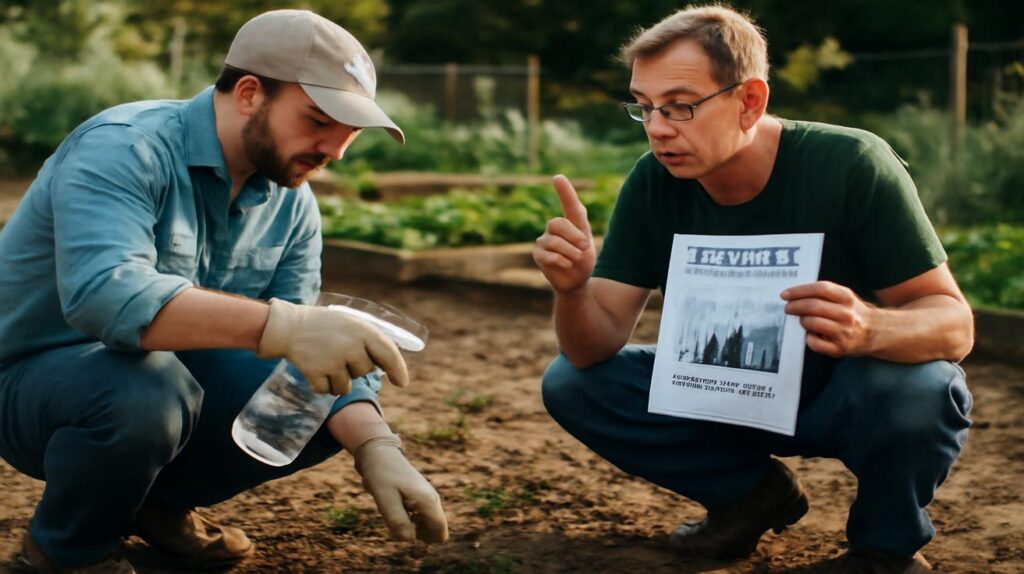
The first time Erin sprayed her “miracle” weed killer, the summer air smelled like a salad. Sharp, tangy vinegar rose from the cracked driveway where dandelions had mapped their stubborn constellations between concrete slabs. She’d read about it everywhere—white vinegar, salt, and a squirt of dish soap: the simple, natural, chemical-free way to banish weeds. No harsh store-bought formulas, no skull-and-crossbones labels, just pantry staples. Harmless, she thought. Even kind. By late afternoon, the weeds had wilted into limp, brown threads. She felt triumphant, even a little smug. Nature-based gardening. Sustainable gardening. The good way.
It wasn’t until the following spring, when the soil under those same cracks turned into something closer to lifeless dust and her nearby thyme bed started to yellow, that she began to wonder whether her “natural” fix had been anything but.
The Kitchen Witch Brew Everyone Swore By
For the past decade, a folk recipe has quietly migrated from gardener to gardener, trending online and whispered over back fences like a secret. It feels clever: mix white vinegar with table salt and a little dish soap, pour it into a spray bottle, and you’ve got a DIY weed killer that doesn’t come in a plastic jug plastered with warnings.
People share it in gardening forums, pin it on inspiration boards, and pass it off as the gentle alternative to synthetic herbicides. “Non-toxic!” “Pet safe!” “Eco-friendly!” The labels are informal, but everywhere. On hot days you can almost smell the trend in suburban neighborhoods: that faint sting of vinegar on pavement, sprayed along fence lines, around mailboxes, and through gravel driveways where dandelions, plantain, and crabgrass try their luck.
It’s a tidy idea that seems to resolve the tension between wanting tidy spaces and wanting a lighter environmental footprint. You can almost hear the pitch: If you wouldn’t put glyphosate in your kitchen, why not use kitchen staples instead?
But as more gardeners lean on this potent trio—vinegar, salt, and dish soap—experts are stepping in with a different story. One that doesn’t smell like salad dressing at all. Instead, it smells like trouble: in the soil, in the nearby beds, and in the living web that holds a garden together.
What’s Actually Happening in the Soil?
Step into the garden, kneel down, and dig your fingers into the earth. Beneath those crumbs of soil is a living city: fungi threading delicate highways between roots, bacteria digesting organic matter, springtails and mites and tiny beetles busy with their work. It’s the kind of world you don’t see, but you feel it whenever a plant thrives. When we talk about “healthy soil,” we’re talking about this unseen bustle.
Now imagine pouring a highly concentrated, acidic liquid on the surface—20 times more vinegar than you’d ever use in a salad. Then add salt, the same mineral that farmers have known for centuries can ruin land if over-applied. Then a surfactant (dish soap), whose entire job is to break down protective barriers and help liquids seep deeper and cling harder.
On the visible level, yes, the weeds shrivel. The mix burns through soft tissue, desiccating leaves almost instantly, especially on hot, sunny days. It feels satisfying because you can watch it happen. But under the surface, something quieter is taking shape.
The problem is not that vinegar, salt, and soap are alien substances. It’s how they work when concentrated and repeatedly applied in one place. As soil scientists and ecologists keep pointing out, “natural” doesn’t always mean “harmless.” Hemlock is natural. So is crude oil. So is arsenic. Context, concentration, and persistence matter far more than a label like “from the kitchen.”
Why White Vinegar Isn’t the Innocent Hero
White vinegar is basically acetic acid and water. In the kitchen, it’s diluted—usually around 5%. Many DIY weed-killing recipes crank that up, urging people to use “cleaning vinegar” or higher concentrations, sometimes 10% or more, because it “works better.” It does work better—because at those levels, acetic acid is a caustic substance.
On plants, it scorches the outer cells. It doesn’t usually travel into roots as synthetic systemic herbicides do, which means tough perennials and deep-rooted weeds often bounce back. The visible destruction can fool you into thinking the job is done, but often it’s just superficial burn, like singeing hair instead of pulling it out by the roots.
In the soil, that same acidity can cause short-term shifts in pH, especially in small or poorly buffered areas like cracks, compacted paths, or containers. Tiny organisms that are finely tuned to particular conditions can be knocked back hard, especially when applications are frequent. Mosses, lichens, and delicate groundcovers near the spray zone can suffer unseen until one day you look up and notice a thinness, a tiredness to the green.
Now add salt—commonly table salt or rock salt—to the mix. This is the second common kitchen staple in the “miracle” blend, and in many ways, it’s the real villain of the story.
The Silent Damage from Salt
Salt in small amounts is something most soils can handle. Rain dilutes, soil particles bind, and plant systems cope. But the recipes passed around online don’t call for a pinch. They suggest cups of salt dissolved into gallons of vinegar, then repeatedly sprayed along stubborn stretches of weeds.
Salt at those levels can:
- Draw moisture out of plant roots, leading to dehydration beyond just the targeted weed
- Build up in the upper soil layers, where most root activity and soil life are concentrated
- Disrupt the balance of essential nutrients, making it harder for plants to take up what they need
- Persist much longer than the quick, surface burn of vinegar
If you’ve ever heard of “salting the earth” as a way to render land barren in old stories, there’s a kernel of truth buried there. High salt concentrations can make soil inhospitable for years, especially in dry climates or compacted zones where rainfall doesn’t wash it away easily.
When gardeners say, “Nothing grows there anymore after I started using vinegar and salt,” they’re not imagining it. That lifeless strip along the fence line, that odd, stubborn bare patch by the driveway where once clover and moss used to quietly fill in—these are the fingerprints of salt stress and accumulation.
And Then There’s the Dish Soap
Dish soap is the third ingredient, the one that people tend to shrug off. “It’s just soap,” they say. “I wash my hands with it.” But in the mix, soap is the enabler. It breaks down the waxy coating on leaves and can reduce the surface tension of water, helping the vinegar-and-salt brew stick and seep.
Some dish soaps also contain fragrances, dyes, and other additives that aren’t exactly designed with soil microbes or nearby ponds in mind. In small drips down a kitchen drain, municipal systems deal with it. But poured straight onto a patch of earth, especially in repeated doses, it becomes another stressor in a system already dealing with acid and salt.
In isolation, a little spilled dish soap in the garden probably won’t bring down an ecosystem. Combined with concentrated vinegar and generous salt across a season or more, it can contribute to the slow dimming of a once-vibrant patch of ground.
More Than Just Weeds Are Dying
The trouble with aggressive weed killing, whether from commercial products or kitchen experiments, is that a garden is never truly a series of isolated targets. It’s a continuum. Spray one thing and, inevitably, something else is touched—by drift, by runoff, by shared soil, by shared roots.
Some of the quiet casualties of the vinegar-salt-soap brew include:
- Soil microbes that break down organic matter and make nutrients available
- Beneficial fungi that form partnerships with plant roots, helping them reach water and minerals
- Earthworms, already sensitive to changes in moisture and chemistry, especially in upper layers
- Volunteer wildflowers and native seedlings that try to colonize edges and cracks
- Pollinator forage, when flowering “weeds” like clover and dandelion are scorched en masse
Across neighborhoods, it adds up. Imagine every driveway sprayed, every gravel strip sterilized, every fence line salted. Now picture how many of those areas used to be tiny, informal corridors where insects could find nectar, where roots could hold soil in place, where microbial communities quietly stitched fragments of landscape together.
Gardeners are noticing. Online, threads have shifted from enthusiastic sharing of DIY recipes to worried posts: “My soil seems dead where I used this.” “Why won’t anything grow back?” “Did I ruin this spot forever?” The fury is not just at the damage—it’s at the betrayal. People turned to these recipes specifically to avoid harming the earth, only to discover they’d been slowly poisoning their own little patch of it.
Seeing the Numbers: A Simple Comparison
To understand how this kitchen brew behaves differently from more soil-conscious weed control methods, it helps to line them up side by side.
| Method | Main Action | Impact on Soil Life | Regrowth Risk |
|---|---|---|---|
| Vinegar + Salt + Dish Soap | Burns foliage, dehydrates plants, salt accumulates | High, especially with repeated use; salt harms microbes and structure | Deep-rooted weeds may return; soil may become barren to all plants |
| Hand Weeding | Physically removes plant and often roots | Low; disturbance is mechanical, not chemical | Lower if roots removed; some reseeding possible |
| Mulching | Blocks light, prevents seed germination | Generally positive; adds organic matter over time | Low where mulch is maintained |
| Boiling Water | Scalds foliage and upper roots | Moderate, localized; heat kills some organisms but doesn’t accumulate | Weeds may return; safer to repeat than salt use |
On a small screen, the numbers aren’t the point. The pattern is. The vinegar-salt-soap trio stands out because it has both immediate and lingering impacts on soil life—something the other methods mostly avoid.
So What Do You Do with a Garden Full of Weeds?
Here’s the hard truth: there’s no magic bullet, no instant spray that erases all unwanted plants without touching anything else. Every choice is a trade-off between effort, time, and ecological consequence.
But that doesn’t mean surrender. It means changing the question from “How do I kill weeds fast?” to “How do I work with this place so weeds don’t dominate?” That shift alone releases some of the impatience that fuels quick, harsh fixes.
Some practical, less destructive paths forward:
- Mulch deeply and smartly. In beds, 5–8 cm of organic mulch—shredded leaves, wood chips, bark—can smother seedlings and create a gentler environment for soil life.
- Plant densely. Bare soil is an invitation. Groundcovers, low perennials, and clumping grasses can occupy the open real estate that opportunistic weeds crave.
- Use targeted tools. A simple crack weeder, hori-hori knife, or stirrup hoe can slice through roots and loosen stubborn plants in driveways and paths without chemicals.
- Reserve boiling water for hardscape only. For weeds in paving cracks, boiling water is surprisingly effective and doesn’t leave chemical residues—just be mindful of nearby plantings.
- Redefine “weed” in some areas. Let clover sprawl in the lawn. Allow violets, self-heal, and dandelions to occupy corners. The less you insist on sterile bare patches, the fewer battles you wage.
None of these methods deliver the dramatic, one-spray annihilation that the vinegar potion promises. Instead, they invite you into relationship: checking, adjusting, noticing, nudging. Gardening, in other words, instead of just controlling.
If You’ve Already Used Vinegar and Salt
If you’re reading this with a sinking feeling because you’ve already sprayed that mix around your yard, you’re far from alone. The first step is not panic; the second is not despair.
You can begin to repair:
- Stop adding salt immediately. Whatever you do next, don’t keep layering salt into your soil.
- Flush with water where practical. In small areas, deep watering or seasonal rainfall can slowly dilute and move salt deeper, though it may take time.
- Add organic matter. Compost, leaf mold, and well-rotted manure help rebuild structure and microbial life, and they can buffer some chemical imbalances.
- Test and observe. Watch what grows back and what struggles. If you can, a basic soil test may show if salts are unusually high or if nutrients are out of balance.
- Plant pioneers. Hardy, tolerant plants—some grasses, clover, or rugged perennials—may be able to recolonize damaged patches and start the healing process.
Restoring soil is slower than harming it. That’s one of the quiet injustices of gardening shortcuts. But life has a way of insisting, of returning in small, determined ways, if we give it half a chance.
A Different Kind of Pride in the Garden
When Erin stands in her garden now, there are weeds. Not a choking carpet, but a scattering: plantain between flagstones, a tuft of grass where she meant for thyme to spread, a tall, fierce dandelion towering over the tulips like an uninvited guest. Some days she pulls them. Some days she doesn’t.
She’s traded the sharp drift of vinegar on hot afternoons for the rich, earthy scent of compost. Instead of the harsh instant-brown of scorched weeds, she finds satisfaction in the slow, steady thickening of her soil, in how easily her trowel slips in now, in the way mushrooms occasionally pop up after rain—a quiet sign that invisible networks below are mending.
Across gardening communities, a small revolution is stirring. People are asking harder questions about the homemade solutions they once trusted without thinking. “Is it safe?” has evolved into “Safe for whom? For how long? In what doses?” Gardeners are realizing that the badge of honor isn’t a yard with no weeds at all—it’s a yard where the life below and beyond the plants is considered, protected, and allowed to be complex.
The story of vinegar, salt, and dish soap is not a tale of villains and fools. It’s a lesson in how easily good intentions can go sideways when we forget that “natural” doesn’t mean consequence-free. The furious voices rising now—from gardeners who feel misled, from experts warning about poisoned soil and silent collateral damage—are part of a longer, deeper conversation about what it truly means to care for a piece of land.
Maybe the next time a weed pushes up between stones or along a fence, the question won’t be “How do I kill you?” but “Why are you here?” Maybe the answer will be compacted soil, or bare ground, or simply the unstoppable urge of life to fill empty space. And maybe, with a little more patience and a little less potion, we’ll learn to respond in ways that don’t scorch the very earth we’re trying to love.
Frequently Asked Questions
Is vinegar alone safe to use as a weed killer?
Household-strength vinegar (around 5%) used sparingly and infrequently, without added salt, is less damaging than the full vinegar–salt–soap mix. However, it still burns plant tissue and can stress nearby plants and some soil organisms, especially with repeated use or higher concentrations. It’s best treated as a last resort in small, isolated areas rather than a routine, blanket solution.
Why is salt in weed-killing recipes such a problem?
Salt doesn’t just affect weeds; it alters the soil itself. In higher concentrations or with frequent use, it can dehydrate plant roots, disrupt nutrient uptake, harm soil microbes, and linger for a long time. Over time, salty soil can become hostile to most plants, not just the ones you targeted.
Can I ever safely use the vinegar, salt, and dish soap mix?
Experts increasingly advise against using this mix in soil where you want anything to grow in the future. If it must be used, it should be limited to tiny, contained, non-soil areas—like isolated cracks in hardscape—knowing there is still some risk of runoff and drift. Avoid using it near beds, lawns, or any area you hope to keep alive and fertile.
What’s a good alternative for weeds in paving or driveway cracks?
Boiling water is one of the safest options for those spots. It scalds weeds without leaving chemical residues behind. A crack weeder or narrow hand tool can also pry out roots mechanically. For long-term management, consider filling wider cracks with sand mixed with fine gravel or even low-growing groundcovers that can tolerate foot traffic.
How can I encourage fewer weeds without constant weeding?
Focus on prevention. Keep soil covered with plants or mulch so light doesn’t reach weed seeds. Plant densely to leave fewer gaps. Improve soil health so desired plants grow vigorously and outcompete opportunistic species. Over time, a well-covered and healthy garden naturally produces fewer problem weeds.